
Add description, images, menus and links to your mega menu
A column with no settings can be used as a spacer
Link to your collections, sales and even external links
Add up to five columns
Add description, images, menus and links to your mega menu
A column with no settings can be used as a spacer
Link to your collections, sales and even external links
Add up to five columns
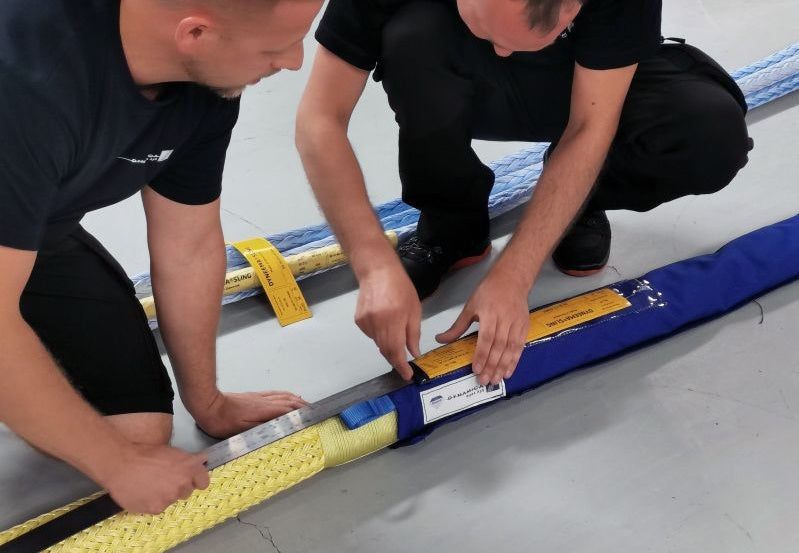

Dyneema Rope Splicing: What Every Sailor and Rigger Should Know
July 31, 2026 3 min read
Dyneema® (and other high-modulus polyethylene / HMPE fibres) has transformed modern sailing, industrial lifting, and technical ropework. It is extraordinarily strong for its weight, stretches very little, floats, and resists UV and chemicals better than most traditional fibres. Yet those same qualities make it unforgiving if you terminate it the wrong way.
This short guide is written for two audiences at once. If you have never spliced Dyneema before, it will give you the essential understanding so you know what questions to ask and why professional splicing matters. If you already splice regularly, it offers practical reminders, common pitfalls, and a curated list of high-quality resources worth keeping.
Why Knots Are a Bad Idea with Dyneema
Dyneema is extremely smooth and has a very low coefficient of friction. A knot that holds perfectly in polyester or nylon can slip, creep, or fail under load in HMPE. Independent tests and manufacturer data consistently show that common knots reduce residual strength by 40–60 %. A properly executed splice, by contrast, retains 90–100 % of the rope’s rated breaking strength.
That single fact is the reason professional riggers almost never knot Dyneema for critical applications. The splice works on the Chinese-finger-trap principle: when the tail is buried inside the hollow braid and tension is applied, the outer braid tightens around the buried section and grips it securely.
The Two Constructions You Will Most Often Meet
Most high-performance Dyneema used for running and standing rigging is a 12-strand single (hollow) braid. These ropes are designed to be spliced by burying the tapered tail inside the hollow core. Covered or double-braid constructions with Dyneema cores exist as well; they require different techniques and must follow the specific manufacturer’s instructions.
Knowing which construction you have is the first step. If you are unsure, ask your supplier or a rigger before you begin.
Useful Tips from the Workshop
- Bury length is non-negotiable. Most manufacturers specify 70–100 times the rope diameter (often expressed in fid lengths). Shorter buries are the most common cause of splice failure.
- Taper the tail. An abrupt cut creates a hard step that concentrates stress. A progressive taper distributes the load transfer smoothly and improves both strength and longevity.
- Lock-stitch every eye. Even a long bury can “walk” when the rope is repeatedly unloaded or vibrates. A few tight stitches with whipping twine keep the eye closed under zero load.
- Use the right tools. Sharp HMPE-rated scissors or a new utility blade, correctly sized tubular fids or a splicing wand, and good lighting make a large difference in both quality and safety.
- Never heat-seal the end if you intend to splice. Melted fibres create hard spots that can abrade the surrounding braid.
- Inspect used rope carefully before splicing. UV degradation, previous overloading, or chafe can reduce residual strength even if the splice itself is perfect.
- When in doubt, have it done professionally. Critical terminations (textile stays, lifting slings, life-safety applications) should be performed or at least inspected by an experienced rigger.
High-Quality Resources Worth Bookmarking
These are the references I personally keep and recommend:
- Marlow - splicing info and instructional videos from our partner manufacturer. https://www.marlowropes.com/performance/splicing-instructions/
- Samson Rope – Official Class II 12-strand splicing instructions and clear instructional videos. The industry benchmark for HMPE. https://www.samsonrope.com
- Animated Knots by Grog – Long Bury Splice – Excellent visual explanation of the fundamental technique.https://www.animatedknots.com/long-bury-splice-knot
- Cruising World – How to Splice Dyneema – Practical, sailor-focused overview with photographs.https://www.cruisingworld.com/how-to/splicing-dyneema/
- Splicing Modern Ropes (2nd edition) by Jan-Willem Polman – The most comprehensive printed handbook currently available for braided and high-tech constructions.
Manufacturer-specific manuals from Marlow, Gleistein and others should always be consulted for the exact product you are working with, as recommended bury lengths and methods can vary slightly by fibre grade and coating.
Final Thought
A correctly spliced Dyneema line is one of the most reliable and elegant terminations in modern ropework. Whether you are replacing a polyester halyard, building soft shackles, or specifying textile standing rigging, understanding the principles above will help you make better decisions and get the full performance the fibre is capable of.
At ropes.sg we stock high-quality Dyneema single-braid and covered constructions and offer professional splicing services for customers who prefer not to do the work themselves or for more demanding marine, offshore and industrial projects. Feel free to contact us if you need advice on rope selection or termination for your particular application.
Image credit: https://dynamica-ropes.com
Subscribe
Sign up to get the latest on sales, new releases and more …